
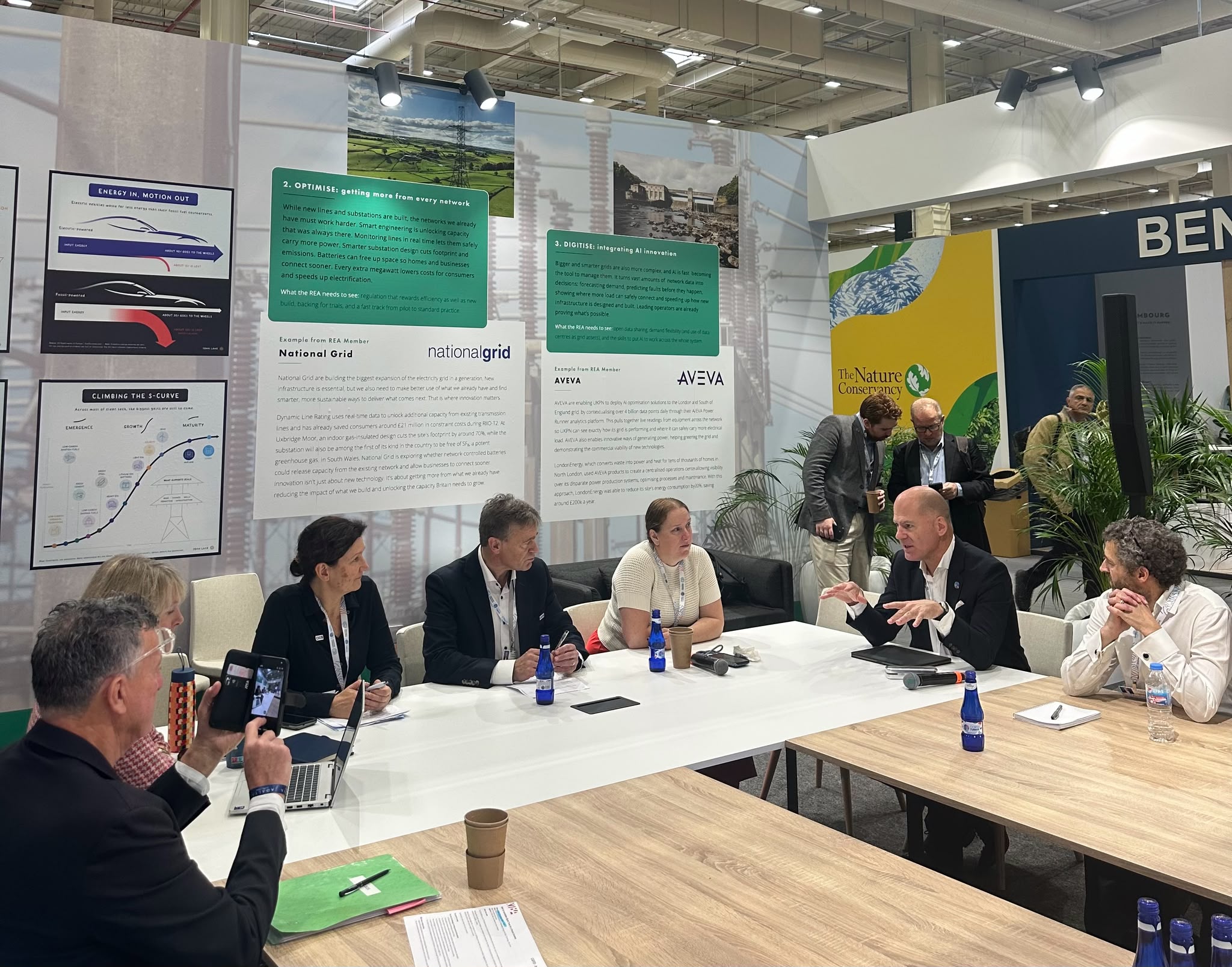
Professor Saul Humphrey, president of the Chartered Institute of Building, reflects on the COP31 climate summit and how discussions and outcomes will impact the built environment
As delegates return from COP31, the headlines will focus on what was not achieved rather than what was. It is true that the conference ended without the comprehensive agreement we had hoped for. At a time when climate impacts are accelerating and expectations for action are rising, that outcome is disappointing. 
Yet COP31 should not be viewed solely through the lens of its inability to reach a final consensus. It also demonstrated that, even amidst geopolitical complexity and competing priorities, momentum continues to build in some of the sectors that matter most to the transition. For those of us working across the built environment, there are genuine reasons for encouragement, alongside a clear recognition of much more to be done.
The context for this year’s negotiations could not have been more serious. Throughout the conference, we heard climate scientists’ issue increasingly stark warnings. We are no longer discussing a distant or gradual warming trend. Evidence mounts that we are approaching, and in some cases potentially crossing, critical tipping points within Earth’s climate systems. These are thresholds beyond which changes may become irreversible, triggering cascading consequences for ecosystems, economies and communities around the world.
What do COP31 warnings mean for the built environment?
For the construction and building sectors, these warnings carry particular significance. The built environment is both a contributor to climate change and one of the sectors most exposed to its consequences. From extreme heat and flooding to resource scarcity and infrastructure disruption, the resilience of our buildings and cities will increasingly determine the resilience of society itself.
It is against this backdrop that the failure to secure an overall agreement at COP31 is frustrating. However, it is worth recognising the leadership shown by those parties who refused to accept an outcome that lacked sufficient ambition. Nearly 40 countries, including members of the European Union, the United Kingdom, Panama and vulnerable Pacific island nations, resisted a weaker outcome that would fail to address the scale of the challenge and create a false sense of progress. Meaningful action requires commitments that match the science, not merely political expediency.
Importantly, while the broader negotiations struggled to achieve consensus, progress continued across several areas directly relevant to the built environment.
Delivering energy efficient buildings at scale
One significant development was support for the Antalya Compact for Energy Efficient Buildings. The compact represents an important recognition that improving the energy performance of buildings must sit at the heart of climate action. Buildings account for a substantial share of global energy consumption and emissions, yet many of the solutions required are already available today.
The compact provides a framework for governments, industry and other stakeholders to accelerate action on building efficiency, support the scaling of best practice, and encourage greater investment in the retrofit and modernisation of existing building stock. This matters enormously. In the developed world, most of the buildings that will exist in 2050 have already been built. Achieving climate goals will depend not only on constructing better new buildings but upgrading and improving what we already have.
For construction professionals, this presents both a responsibility and an opportunity. Delivering energy efficient buildings at scale will require new skills, smarter procurement, stronger standards, high-quality work and a relentless focus on performance in use. It is an agenda that aligns closely with CIOB’s long-standing commitment to quality, competence and professionalism.
Addressing whole-life carbon and reducing emissions
Importantly, the compact also acknowledged the need to look beyond operational energy. If the built environment is to make its full contribution to climate goals, we must address whole-life carbon, reducing emissions not only from how buildings are operated, but also from the materials, construction processes, maintenance and eventual reuse of assets.
Another positive development was the momentum behind the 35×35 electrification pledge. By seeking to significantly increase the share of final energy demand met through electrification by 2035, the initiative reflects a growing consensus that electrification will be central to decarbonising economies.
For the built environment, electrification supports the transition away from fossil fuel-based heating and cooling systems, encourages the adoption of efficient technologies such as heat pumps, and helps unlock the benefits of increasingly decarbonised electricity systems. When combined with energy efficiency measures, electrification offers a practical pathway to reducing emissions while improving building performance and occupant wellbeing.
The discussions around these initiatives reinforced an important message: the built environment is moving from the margins of climate policy to the mainstream. Increasingly, governments and international organisations recognise that climate goals cannot be achieved without transforming the way we plan, construct, operate and retrofit buildings and infrastructure.
This growing recognition is welcome, but recognition alone will not reduce emissions. Progress now depends on implementation.
The challenge with deploying these approaches at scale
The challenge facing our sector is not a lack of solutions. We know how to design low-carbon buildings. We know how to improve energy efficiency. We understand the value of circular economy principles, material efficiency and whole-life carbon assessment. The difficulty lies in deploying these approaches fast enough, consistently enough and at sufficient scale.
That is why collaboration remains so important. Governments, industry leaders, investors, professional bodies and educational institutions all have vital roles to play. No single organisation can deliver the transition alone. Success will depend on partnerships that bring together policy, finance, innovation and the skills needed to turn commitments into measurable outcomes.
Leaving COP31, I remained cautiously optimistic. Not because the challenge has become easier, but because awareness of both the risks and the solutions continue to grow. The science tells us that the window for action is narrowing. The consequences of delay become more costly with every passing year. Yet the developments we saw at COP31, away from the main plenary sessions, also demonstrated that positive change is possible when sectors align behind a common purpose.
For the built environment, the direction of travel is clear. The Antalya Compact, the 35×35 electrification pledge and the increasing visibility of buildings within the global climate agenda all point towards greater ambition and stronger action.
COP31 did not deliver the breakthrough agreement we hoped for. But it did reinforce that the transition is already underway. Our task now is to accelerate it. The construction sector has both an obligation and an opportunity to lead. If we match the urgency of the science with the determination of our profession, we can help build not only net zero buildings, but a safer, more resilient future for generations to come.
I attended COP31 as a delegate of Society for the Environment (SocEnv). CIOB is a licensed member of SocEnv.