

The new publicly owned Great British Grid tackles a real bottleneck. But building more network is only half the answer. We also need to see, and trust, the flexibility already sitting in our buildings, writes Professor Jacopo Torriti of the University of Reading
The UK’s energy transition is no longer constrained by a shortage of renewable projects. Increasingly, it is constrained by the ability to connect and transport electricity.
A real infrastructure problem
Connection queues have become one of the biggest barriers to growth and decarbonisation. Ofgem figures put the demand connection queue at 125GW as of June 2025, up from 41GW the previous November. Generators are waiting, and so are housing developments, EV charging, industrial sites and data centres.
Against that backdrop, the government’s announcement of the Great British Grid is welcome.
GB Grid is a new publicly owned body within Great British Energy that will invest public capital, alongside private money, in electricity network infrastructure. It is funded
from GB Energy’s existing £4bn budget.
Alongside it, the government will bring forward reforms to expand self-build connections. It will also speed up competitive tendering for transmission projects, so a wider range of organisations can compete to deliver them.
The scale of the task justifies this. NESO now estimates that around £89bn of grid investment will be needed through the 2030s, a 53% increase on its 2024 estimate. More competition, more sources of capital and more routes to delivery address a genuine coordination problem.
But infrastructure alone will not solve it
Even so, wires are only part of the picture. Historically, our system has been supply-led: generation ramped up and down to follow demand. A system dominated by wind and solar cannot work that way. As we electrify transport and heating, demand will have to move in time and place to match when clean power is available and where the network has room for it.
Reinforcement reduces bottlenecks, but it cannot eliminate the variability of renewable output. Nor can it be built fast enough, or cheaply enough, to cover every peak. A larger grid also needs smarter balancing arrangements alongside it.
This is why I would put the point bluntly. The challenge is no longer simply how to build enough network capacity but how to operate the resulting system efficiently. The fastest connection is the one you never need, and flexible demand is how we avoid needing some of them.
Flexibility has to become visible
The ambition for flexibility is not in doubt. The government’s Clean Power 2030 plan states that by 2030, flexible demand response should provide 12GW of capacity during peak demand periods. Yet the buildings sector, which will contain the most numerous flexibility providers, remains largely untapped.
The reason is not a lack of willing households or capable technology. It is that we lack a trusted way to say how much flexibility a given building can actually offer. Without that, suppliers cannot price it, aggregators cannot pool it and network operators cannot plan around it. Flexibility that cannot be seen cannot be relied upon, and what cannot be relied upon cannot substitute for steel in the ground.
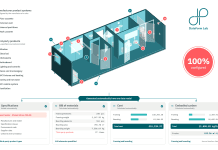
We have solved a similar problem before. Energy Performance Certificates made a building’s efficiency legible to buyers, tenants, lenders and policymakers. An Energy Flexibility Certificate could do the same for flexibility.
This is the idea we set out at the University of Reading in work as part of the Energy Demand Research Centre. The certificate would condense the many factors that determine a building’s flexibility into a single, readable rating. These include the thermal inertia of the fabric, the heating and cooling system, any batteries or smart EV charging and the controls that tie them together.
Because an EPC-style A–G ladder cannot capture something so multi-dimensional, the proposal uses a two-part grid. A letter (A–F) shows magnitude: how many kilowatts a building can shift. A number (1–6) shows quality: how often, how fast and for how long it can respond, and with how much notice. Separate summer and winter ratings reflect the fact that a heat pump’s value to the system changes with the seasons.
A certificate that read “C2 in winter, B5 in summer, main flexible load: heat pump, automated control” would tell a supplier, an aggregator or a distribution network operator something useful in seconds.
The potential applications are practical. Suppliers and aggregators could value a site, or a whole neighbourhood, quickly. Distribution network operators could use aggregated ratings to plan reinforcement and to support their price control submissions. Local authorities could identify where flexibility is strong and where investment is most needed. Households would gain a clearer picture of what their home could earn and which upgrades would help.
I should be clear about the limits. A certificate does not create flexibility, make buildings more flexible or cut bills by itself. What it does is make flexibility legible, so that markets, networks and policymakers can start to count on it.
Building both halves
GB Grid School of the Built Environment reform should help unblock the physical network, and that is worth doing quickly. But the government should treat the demand side as the other half of the same programme and not as an afterthought.
That means asking, as the details of GB Grid emerge, how network investment decisions will take account of the flexibility already available locally. It means standardising how that flexibility is measured and reported, and it means giving building owners a reason to invest in it.
Britain does not need to choose between building the grid and managing demand. It needs both, designed together. The sooner we can see the flexibility in our buildings, the sooner we can stop treating it as an unknown and start using it.