
As the number of solar installations continues to rise, so too does the absolute number of reported incidents. This makes it important for developers, specifiers and installers to focus on quality products, compliant system design and professional installation practices from the outset
While products designed to respond to faults remain important, the most effective fire prevention measures are implemented long before commissioning. Safe, reliable solar installations start with quality components, professional installation and good system design.
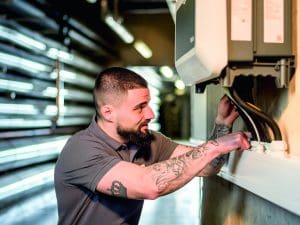
Good design is the foundation of safety
Many potential risks can be addressed before installation begins. Compliance with IEC 62548 for system design and IEC 60364-7-712 (implemented in the UK through BS 7671 IET Wiring Regulations) for installation is fundamental to safety. High quality system components should be correctly specified and sized for the voltages and currents they will carry, while quality photovoltaic cables, compatible connectors and appropriate IP-rated, Protection Class II enclosures should be used where required. Double-insulated, UV-resistant DC cable should always be specified for PV installations.
Equipment location is equally important. Inverters should be installed in well-ventilated areas with sufficient access for inspection and maintenance, often on external walls or, where appropriate, mounted on non-combustible surfaces in accordance with manufacturer guidance and site requirements.
Designers should also seek to minimise internal DC cable runs where practical and route them using the safest path through the building, keeping them separated from existing AC and communications cabling. The same principles apply to battery storage systems, including adequate ventilation, suitable clearances and maintenance access. As with any electrical system, damaged components, water ingress or manufacturing defects can develop over time, making regular inspection important.
Why connections matter
The most common causes of PV system fires are DC connections and cables. Small increases in resistance caused by poor workmanship, damaged components or incompatible connectors can generate excessive heat and, in severe cases, lead to electrical arcing. For this reason, connectors must only be mated with connectors from the same manufacturer and of the same type. While products from different manufacturers may appear physically compatible, combining them can unknowingly create non-compliant installations, increasing the risk of poor connections, overheating and long-term degradation. Using matching connector systems, together with correct crimping techniques using approved and calibrated tools, and ensuring quality installation practices, remains one of the simplest ways to maintain electrical integrity throughout the life of a system.
The most effective design approach for fire prevention is minimising the number of DC connection points, as these are shown to be the most common point of failure.
Does more electronics always mean more safety?
As solar technology evolves, there is often an assumption that adding more electronics automatically creates a safer system. However, every additional component, be that module-level power electronics, DC isolator, junction box or connector, must perform reliably for decades.
While module-level power electronics can offer benefits in certain applications, designers should carefully consider whether they are genuinely required as they also increase system complexity and the number of potential failure points. Many documented faults occur at the connections between components rather than within the inverter or module itself. Avoiding unnecessary complexity can improve long-term reliability and safety.
It should also be considered that in the event of a roof-mounted device, every component failure introduces the need for operatives to access the roof safely.
Built-in protection from Fronius
Inverter technology provides another layer of protection. Fronius incorporates multiple safety functions directly within its inverter platforms, without compromising the number of connection points including Arc Fault Circuit Interruption (AFCI) technology on GEN24 and Verto inverters.
Additional integrated safety features include active insulation measurement before DC power is switched on, AC/DC sensitive residual current monitoring (RCMU), reverse polarity protection, continuous thermal monitoring and automatic power reduction during overload or elevated temperature conditions.
A suitable means of DC isolation is required within every PV installation. By integrating DC isolation within the inverter, Fronius can help reduce external components and connection points while providing installers flexibility.
Fronius also offers integrated Type 1 and Type 2 DC surge protection against lightning-related overvoltage and surge events.
Safety and reliability have been central to Fronius for decades. Established in Austria in 1945, Fronius is a family-owned company with over 80 years of experience in power electronics through its welding technology and battery charging divisions.
Active in solar since 1992, Fronius is one of Europe’s most trusted inverter manufacturers, known for quality, innovation and long-term support. Supported by local training and service from Fronius facilities in Milton Keynes, Sheffield and Kilmarnock, customers benefit from long-term support throughout the life of their installation.
Its focus on safety also extends beyond electrical protection.
Looking beyond fire safety
Safety does not end with electrical design. As solar systems become increasingly connected to battery storage, EV chargers and energy management platforms, cybersecurity is becoming an essential part of the specification and decision-making process.
Modern inverters manage energy generation, storage, monitoring and grid interaction, making system access, operational data and resilience increasingly important.
Fronius follows Security by Design and Security by Default principles, embedding cybersecurity throughout product development. The company operates an ISO/IEC 27001-certified Information Security Management System (ISMS) and continuously reviews its security practices against recognised standards and evolving requirements.
Fronius stores customer and system data within European data centres, with primary servers located in Austria. Customer information and PV production data are stored separately to help limit exposure in the unlikely event of a cyber incident, while role-based permissions ensure system owners retain control over who can view and manage their installations.
Cybersecurity is a shared responsibility. Keeping firmware updated, using secure network configurations and regularly reviewing user access can all improve system resilience.
A safer approach to solar
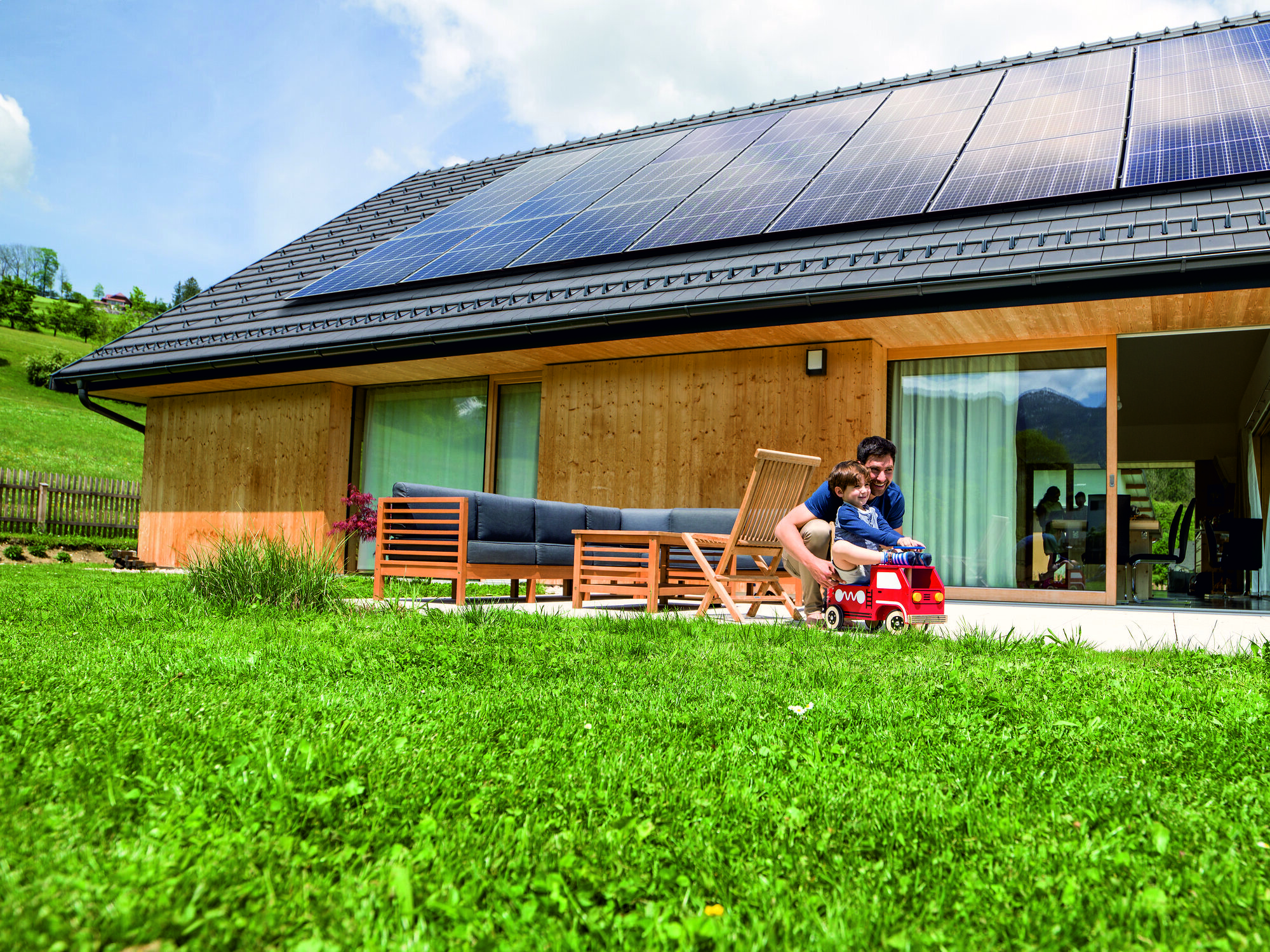
By prioritising quality products, proper connections, sensible system architecture, professional training and integrated safety technologies, developers and asset owners can reduce risk and support reliable long-term performance. Because solar safety, whether physical or digital, starts with making the right decisions from day one.
*Please note, this is a commercial profile.